Market structure in plain words — why a broken low is not a reversal yet
Market structure answers one question: who is leading price right now — the buyer or the seller. The textbook answer is in every course. On a real chart that answer fails regularly.
IDM and the confirmed low
The reason is that the market moves through traps. It dips under a low, collects the orders of everyone who believed in a reversal, and carries on higher. Formally the low is broken — in fact nothing changed.
The classic read and its limit
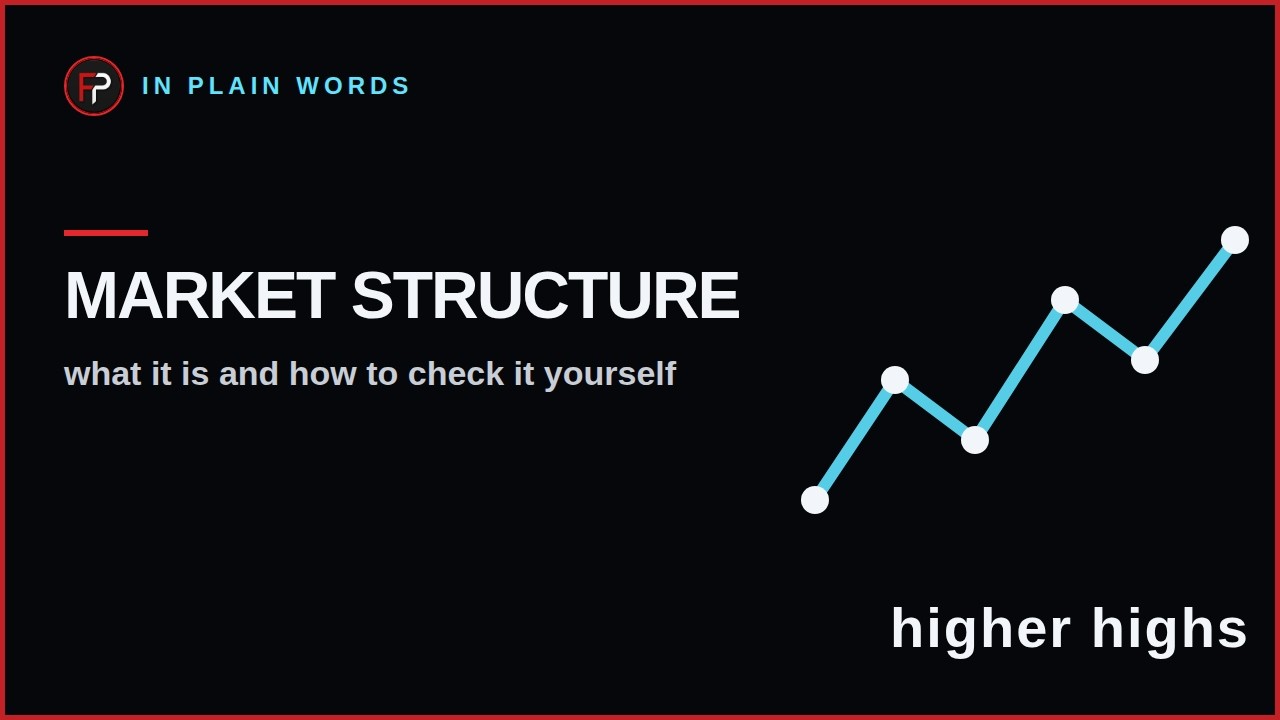
The classic answer: highs above the previous ones and lows holding means the buyer is in charge; price under a low means character changed. On a real chart that answer fails regularly.
Hence our rule: not every low is a foundation. The one that formed inside the move up is bait — inducement, or IDM for short. The high above it counts as confirmed only after price was brought back to the bait and the liquidity was taken. The real low becomes the bottom of that very dip.
A live example: EURUSD, daily
January 13, 2025 — a labelled low at 1.01775. June 19, 2025 — a pullback inside the push up, low 1.144625: that is the bait. July 1, 2025 — a high at 1.18299. August 1, 2025 — price came back and took the bait: the day's low 1.13916, 55 points below, and the close of that same day 1.15859 — near the high of the day. September 17, 2025 — a new high at 1.19188: 527 points from the real low.
What the free version shows
The markup on screen comes from the free script, not the closed one. The free version does not label the bait itself — deliberately, so the picture stays simple for a beginner. It already counts structure with the bait in mind: it labels the confirmed low, not every pullback.
How this fits the FocusProfit model
Market structure is how the FocusProfit methodology decides which side to work from. The FocusProfit Trade Model indicator marks structure automatically, accounting for IDM when confirming extremes.
The next lesson in the course is the trading range: how to measure whether price is expensive or cheap right now.
Related lessons
SYSTEMATIC WORK WITH THE MARKET
This material is open: no application, nothing to pay. There is one paid product — the Trade Model indicator, and it is not on sale right now: we are taking signups for the queue.
JOIN THE QUEUE